WorkPro Quantum 9000 Review (2026): Is This the Best Mid-Range Ergonomic Chair?

If you’re spending 8–10 hours a day at a desk, your chair is the most important piece of equipment you own. The WorkPro Quantum 9000 promises ergonomic support at roughly one-third the cost of a Herman Miller Aeron. That’s a bold claim — and after 30 days of daily use, here’s the honest verdict.
Bottom line: The WorkPro Quantum 9000 delivers solid adjustability, genuine breathability, and decent lumbar support for most users under 250 lbs. It won’t match premium chairs on material quality, but at ~$350 (or closer to $297 with stackable discounts), it punches well above its weight class.
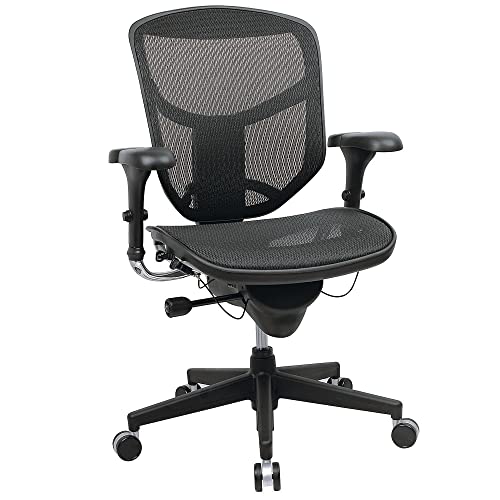
Quick Verdict & At-A-Glance Specs
The Quantum 9000 earns 4.5 out of 5 stars on Amazon, which aligns with real-world experience. It’s not perfect. But it’s genuinely good value for a mid-range ergonomic chair, and the Amazon user reviews confirm consistently positive feedback across thousands of buyers.
For detailed dimension specifications, here’s what you’re getting:
Key Specifications
| Specification | Detail |
|---|---|
| Overall Height | 37.5 – 43.75 inches |
| Seat Height Range | 17 – 21 inches |
| Weight Capacity | 250 – 275 lbs |
| Back Height Adjustment | 5-click system |
| Backrest Tilt | 30 degrees |
| Tilt Lock Positions | 3 |
| Seat/Back Material | Breathable mesh |
| Frame Material | Nylon, plastic, metal |
| Standard Price | ~$350 |
| BIFMA Compliant | Yes |
The chair ships fully boxed and assembles in under 30 minutes with basic tools. That’s a good start.
Who Is This Chair For? (And Who Should Skip It)
This chair suits a specific type of buyer. Get that right, and you’ll be satisfied.
It’s the right pick if you:
- Work remotely for 8–10 hours daily and feel back strain by 3 PM
- Weigh under 250 lbs and need reliable lumbar support without a $1,000+ spend
- Run hot and need a mesh seat to reduce heat buildup during long sessions
- Game competitively and want recline flexibility with adjustable armrests
Skip it if you:
- Exceed the 250–275 lb weight capacity
- Need rigid, high-pressure lumbar support (the Quantum 9000 uses a softer convex curve)
- Prioritise premium leather aesthetics or executive styling
- Want a chair with warranty coverage beyond the standard WorkPro terms
If you’re comparing options at the lower end, the Clatina Mellet office chair and the Tralt ergonomic office chair are worth a look for budget-first buyers. But if comfort at 10 hours is your benchmark, the Quantum 9000 edges both.
First Impressions: Design, Build Quality & Materials
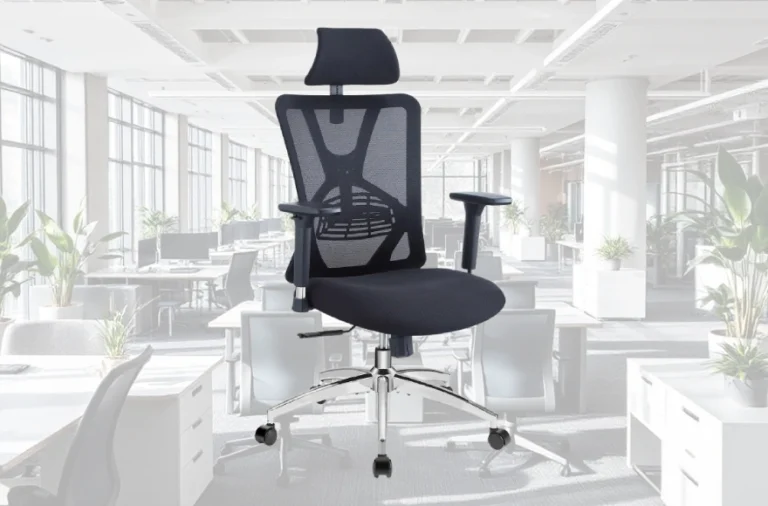
Out of the box, the Quantum 9000 looks more expensive than it is. The all-black mesh design is clean. There’s no flashy gaming aesthetic — just a professional mid-back profile that fits most office environments.
The convex back shape is immediately noticeable. It curves outward slightly to cradle the lumbar region, which differs from flat-back designs that offer no contour support. This isn’t a marketing feature — you feel the difference within the first hour of sitting.
Build quality is honest, not premium. The frame uses nylon, plastic, and metal components. None of it feels cheap, but none of it feels like a $1,500 chair either. Armrests have some lateral flex under pressure, which is a minor complaint.
The chair carries BIFMA compliant certification, meaning it passed independent safety and durability testing. That matters for a chair in this price tier. Many competitors in the $200–$400 range skip this standard entirely.
The mesh itself is tightly woven and firm without being rigid. It provides airflow, supports posture, and hasn’t shown visible deformation after 30 days of daily use. That’s encouraging.
Real-World Performance: Comfort After 30 Days
Here’s what most reviews skip. Sitting in a chair for 15 minutes in a showroom tells you almost nothing. Testing it across 10-hour workdays tells you everything.
The 30-day comfort test results from Ergonomic Trends align closely with this hands-on experience. The chair performs well through the first 6 hours. Back support holds. The mesh breathes.
Hours 7–10 reveal more nuance. The waterfall seat cushion — where the front edge curves downward slightly — genuinely reduces pressure behind the knees. Most budget chairs use a flat seat pan that cuts circulation. This one doesn’t. That’s a real ergonomic win.
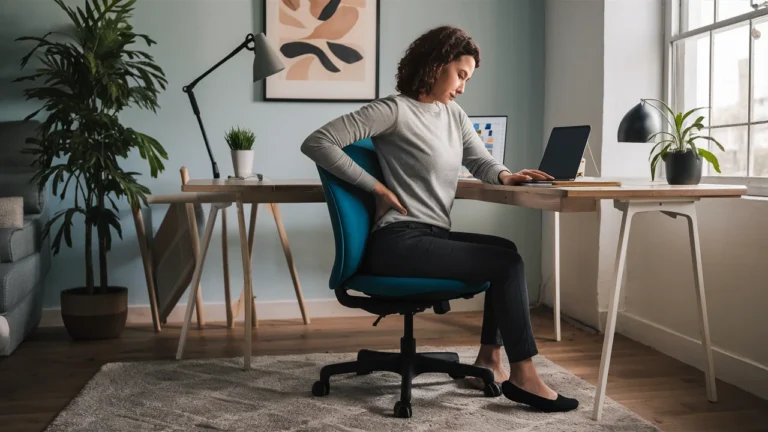
Lumbar support is adequate. It’s not adjustable in depth, only in height via the 5-click system. Users with a pronounced lower-back curve may find it underwhelming. Users with mild to moderate lumbar needs will find it sufficient.
Heat buildup is minimal. Mesh breathability outperforms foam or vinyl alternatives by a clear margin. After 8 hours, there’s no sticky, uncomfortable warmth — which is the single biggest daily comfort factor most buyers underestimate.
Durability at 30 days shows no mechanical wear. The tilt mechanism operates smoothly. The casters roll cleanly on both hardwood and carpet. The gas lift holds height without drift. These are the three failure points to watch on budget chairs — all three are holding.
Adjustable Features & Ergonomics Deep Dive
This is where the Quantum 9000 earns its price. The adjustment range is genuinely impressive for a mid-range ergonomic mesh office chair.
Seat Height
The seat height adjusts from 17 to 21 inches — a 4-inch travel range. That works for most users between 5’4″ and 6’2″. Users outside that range should check desk height compatibility before buying.
Back Height
The 5-click back height adjustment lets you move the lumbar support up or down to position it at your L4–L5 vertebrae. This is simple but effective. You pull a lever, reposition, release. No tools required.
Armrests
The 3D armrests are a standout feature at this price. They pivot inward up to 25 degrees and outward up to 5 degrees, allowing a natural elbow position whether you’re typing, gaming, or drafting. Height adjustment adds the third dimension.
The armrest pads are firm plastic with a thin foam layer. They won’t feel luxurious. But the pivot range compensates — a correctly-positioned arm reduces shoulder tension far more than soft padding does.
Recline & Tilt
The backrest tilts to 30 degrees with 3 locking positions. That’s enough range for active sitting or a brief recline break. The tilt tension control dial (under the seat, right side) adjusts resistance to match your body weight. Lighter users should dial it down. Heavier users will need firmer tension set.
Synchro-Tilt Mechanism
This is the feature most reviews mention but rarely explain. The synchro-tilt system moves the seat and backrest together at a 2:1 ratio — for every 2 degrees of backrest recline, the seat tilts 1 degree. This keeps your thighs roughly parallel to the floor as you lean back, preventing that “sliding forward” sensation you get on standard tilt chairs.
It works. The motion feels natural rather than mechanical. It’s the biggest ergonomic differentiator between this chair and cheaper single-pivot alternatives.
Pricing, Value, and Best Deals
Standard retail sits at approximately $350. That positions it squarely in the mid-range bracket — below Steelcase and Herman Miller, above the $150–$200 entry-level category.
The value context matters. The Herman Miller Aeron starts at roughly $1,000–$1,500. That’s 3–4 times the Quantum 9000’s price. The Embody stretches further still. For users who can’t justify that spend, the Quantum 9000 closes the comfort gap significantly.
Discount stacking is real. A current Office Depot discount code — validated by the r/buildapcsales community — can drop the price to approximately $297 when combined with a responder discount or loyalty code. That’s a meaningful saving. Check the thread before buying at full price.
At $297–$350, the Quantum 9000 delivers a strong return. You’re paying for BIFMA certification, genuine 3D armrests, synchro-tilt, and a breathable mesh design. That’s a lot for the money.
Pros & Cons Summary
Pros:
- Synchro-tilt mechanism feels natural and smooth
- Mesh breathability eliminates heat buildup during long sessions
- 3D armrests with 25-degree inward pivot reduce shoulder strain
- BIFMA compliant — independently tested for safety and durability
- Waterfall seat edge improves circulation during 8–10 hour sessions
Cons:
- Lumbar depth isn’t adjustable — fixed convex curve won’t suit all spine types
- 250–275 lb weight cap limits larger users
- Armrest pads are firm plastic with minimal cushioning
- Plastic components don’t carry the premium feel of higher-tier chairs
- No headrest option available
Best Alternatives & Comparisons
Choosing the Quantum 9000 depends on what else is available at comparable price points. Here’s an honest comparison.
Herman Miller Aeron — The premium benchmark. Better materials, better adjustability, and a 12-year warranty. But it costs 3–4 times more. Our Herman Miller Aeron chair review covers where it justifies that gap. For most users, it doesn’t at the current street price.
Steelcase Leap V2 — The Steelcase Leap V2 chair adds a flexible backrest that moves with your spine dynamically. It’s a better ergonomic investment long-term, but costs $800–$1,200. Meaningful step up in price and quality.
SIHOO M57 — The SIHOO M57 office chair is a genuine budget competitor at around $200–$250. It lacks synchro-tilt and the armrest flexibility, but it’s a solid choice for lighter use cases.
Ticova Ergonomic Office Chair — The Ticova Ergonomic Office Chair sits in the same mid-range bracket with adjustable lumbar depth — a feature the Quantum 9000 lacks. Worth comparing if lumbar firmness is your priority.
HON Ignition 2.0 — The HON Ignition 2.0 chair offers a similar price bracket with stronger brand support. Build quality feels slightly more durable, though adjustability is comparable.
X-Chair — X-Chair models target users wanting massage and heat features alongside ergonomics. If you’re willing to spend $500–$700 for those extras, they’re worth considering.
Frequently Asked Questions
Is the WorkPro Quantum 9000 good for tall users?
The overall chair height ranges from 37.5 to 43.75 inches. Users up to approximately 6’2″ should fit comfortably. Taller users may find the mid-back design leaves their upper back unsupported.
How long does the Quantum 9000 last?
With daily 8–10 hour use, expect 3–5 years before mechanical wear becomes noticeable. The BIFMA certification gives a reasonable durability baseline. Gas lift and tilt mechanisms are the first components to watch.
Is the mesh seat durable?
After 30 days of hard daily use, the mesh shows no deformation or sagging. Tight weave construction is more durable than looser alternatives. Long-term durability beyond 12 months requires further data.
Does it work for gaming?
Yes — the 30-degree recline, 3D armrests, and breathable mesh suit long gaming sessions. It won’t match a dedicated gaming chair for aesthetics, but it outperforms most gaming chairs ergonomically.
Final Verdict
The WorkPro Quantum 9000 is the right chair for a specific buyer. That buyer needs 8–10 hours of daily comfort, doesn’t want to spend $1,000+, and values real adjustability over premium materials.
It delivers. The synchro-tilt mechanism, 3D armrests, and waterfall seat are genuine ergonomic features — not marketing language. The mesh breathes well. The adjustment range covers most body types under 250 lbs.
It’s not for everyone. Users needing adjustable lumbar depth, premium build quality, or higher weight capacity should step up to the Steelcase Leap V2 or invest in a Herman Miller if budget allows.
At $297–$350, the WorkPro Quantum 9000 is among the best value ergonomic chairs available in 2026. Buy it during an Office Depot discount event. Stack the codes. Then sit comfortably for the next few years.