Herman Miller Aeron Chair Review 2026: Is the Icon Still Worth $1,300?

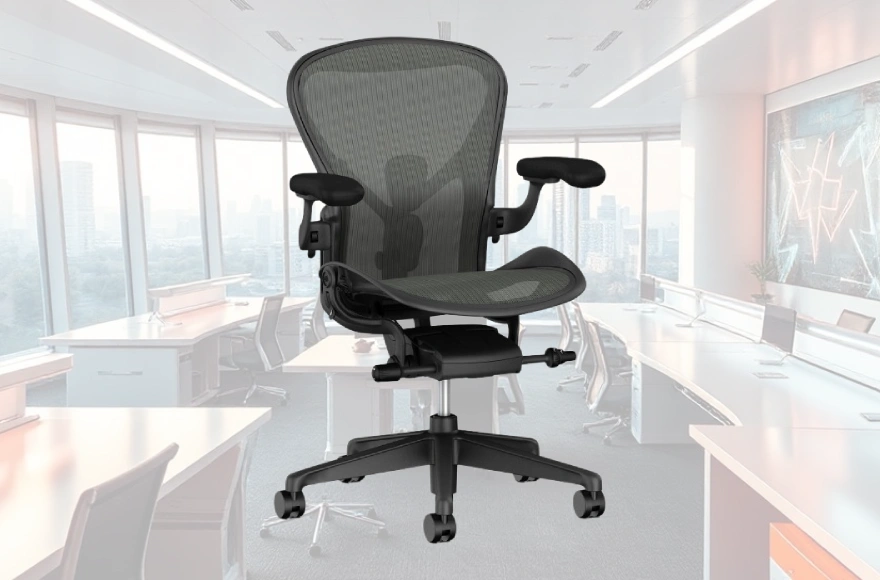
After six weeks of testing the Aeron at 8–9 hours daily, the verdict isn’t simple.
The Herman Miller Aeron is one of the most recognized ergonomic task chairs ever built. It’s also one of the most debated. Some professionals swear it saved their back. Others find the firm mesh and hard plastic frame a poor match for their body type or sitting habits.
This review cuts through the hype. You’ll find real testing observations, honest limitations, and a clear answer to the question every buyer eventually asks: is the Aeron actually worth it in 2026?


Quick Verdict: Who Should Buy the Aeron (and Who Should Skip It)
Buy it if: You sit upright at a desk for 8+ hours daily, prioritize spinal health over softness, and can justify a premium investment in a chair you’ll use for 15+ years.
Skip it if: You sit cross-legged, need a headrest, have a tighter budget, or prefer a cushioned, bouncy feel underfoot. If you’re after the best ergonomic office chair for long hours without committing to this price tier, better alternatives exist.
For taller users outside the Size B range, check the best office chairs for big tall people before deciding.
The one-line verdict: The Aeron earns its reputation — but only for a specific type of sitter.
Aeron Size Guide: A vs B vs C
| Size | Height Range | Weight Range | Best For |
|---|---|---|---|
| Size A | Under 5’4″ | Under 130 lbs | Petite users |
| Size B | 5’5″–6’2″ | 150–230 lbs | Most users |
| Size C | 6’2″+ | 230+ lbs | Larger frames |
Getting the size wrong kills the ergonomic benefit entirely. Size B fits the widest range of buyers.
First Impressions: Unboxing, Build Quality & Classic Aeron vs Remastered
The Aeron arrives partially assembled. Setup takes about 20 minutes with no special tools.
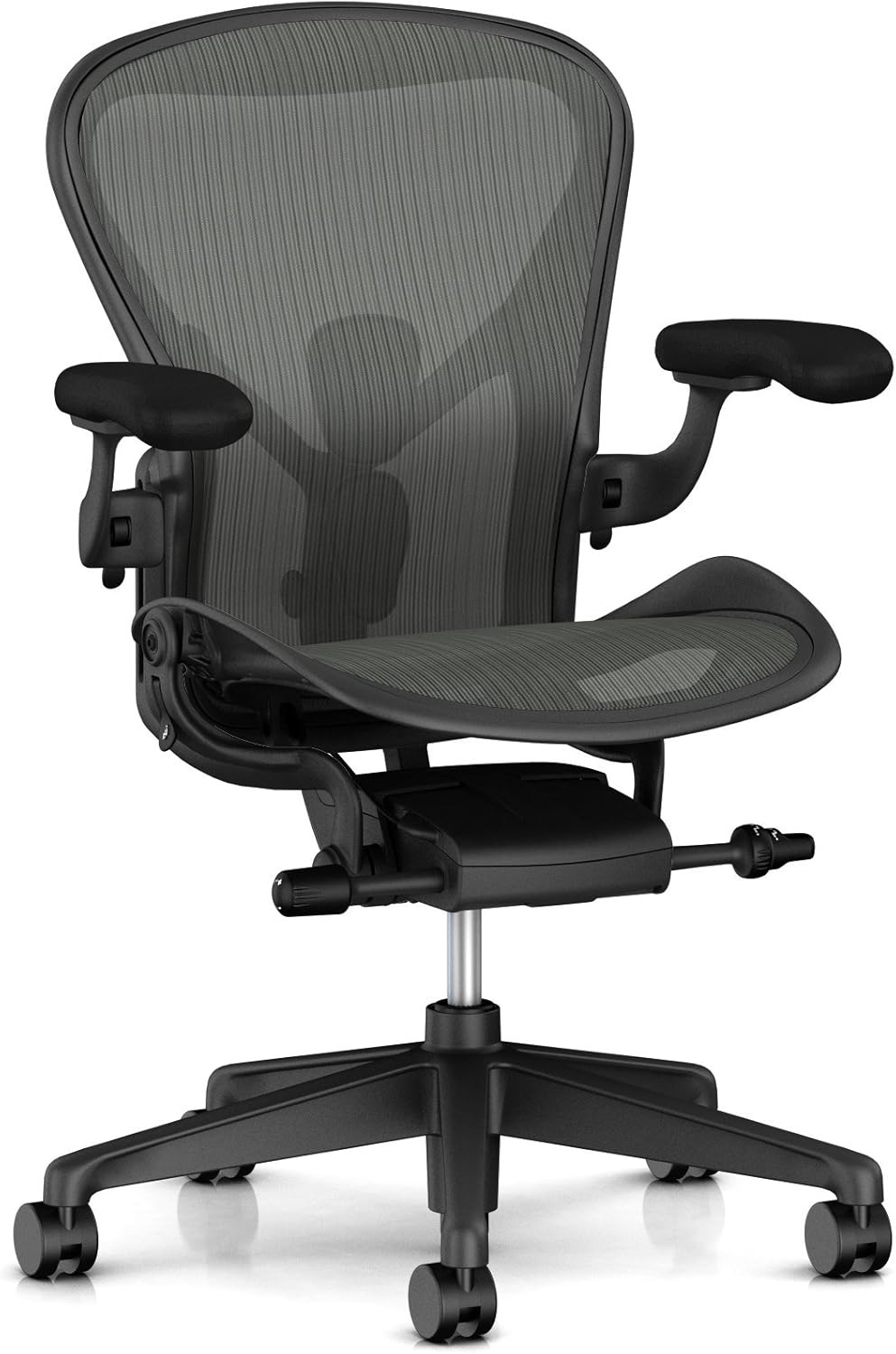
First contact is striking. The 8Z Pellicle mesh feels nothing like a standard foam seat. It’s taut, slightly springy, and noticeably cooler than any padded chair. Visit the official Herman Miller Aeron page to review sizing specs and configuration options before buying.
The build quality is immediately apparent. Every adjustment lever clicks firmly. The aluminum frame shows no flex. Nothing rattles.
Classic Aeron vs Remastered Aeron
The Remastered version (released in 2016) isn’t a cosmetic refresh. Herman Miller upgraded the lumbar support system to PostureFit SL, which now supports both the sacrum and lumbar vertebrae independently — compared to the original’s single-point support.
The armrests also received a softer, more contoured redesign. The tilt mechanism became smoother. If you’re buying used, verify which version you’re getting. The Remastered is worth the premium over older Classic units.
One honest note: the hard plastic frame along the seat edge is polarizing. Some users find it fine. Lean back frequently, and you’ll never notice it. Sit for 8+ hours upright and rigid? You might feel it against your thighs.

Real-World Testing: 6 Weeks of 8–9 Hour Daily Use
Week one revealed the biggest surprise. The Aeron doesn’t feel luxurious.
There’s no sink-in softness, no plush foam welcome. The mesh holds your weight in suspension — firm, supportive, and a little austere. That adjustment period is real. After years on foam chairs, the Pellicle mesh feels almost clinical at first.
TechGearLab’s independent Aeron rating confirms this split reaction: the chair scores exceptionally high for support and ventilation, but lower for initial comfort compared to padded alternatives.
What Surprised Us After Week 1
By day five, the firmness stopped registering as discomfort. The back no longer ached after long sessions. That’s the real test.
The 8Z Pellicle suspension distributes weight across eight zones of different tension. Softer zones sit under the thighs, firmer zones support the lumbar region. The effect is reduced pressure on the ischial tuberosities — the sit bones that cause pain on flat, dense foam after hours of use.
Heat build-up was essentially zero. On dense foam chairs, after two to three hours the seat becomes noticeably warm. The Aeron’s mesh allows constant airflow. No sweat. No sticking.
How It Held Up After 4+ Weeks
No sag. No creak. No adjustment drift.
The lumbar support held its position across multiple days without requiring recalibration. The tilt mechanism stayed calibrated. After six weeks, the chair felt identical to day one — which is exactly what a premium ergonomic task chair should deliver.
The 3.8/5 average from 124 user reviews reflects a consistent pattern: very high ratings from upright-focused sitters, lower ratings from those expecting cushion-style comfort.

Ergonomics Deep Dive: PostureFit SL, 8Z Pellicle Mesh & Adjustability
This is where the Aeron genuinely separates from most competitors.
How PostureFit SL Supports Your Lower Back
PostureFit SL targets two spinal zones simultaneously. The lower pad braces the sacrum. The upper pad supports the lumbar curve. Both are independently adjustable.
This dual-zone approach matters for people with lower back pain caused by slouching or anterior tilt. If you carry tension in your lumbar region after long desk sessions, PostureFit SL addresses it directly. For users dealing with posture-specific issues like anterior pelvic tilt, this chair pairs well with targeted support strategies — see our guide to the best ergonomic chair for anterior pelvic tilt for context.
The best mesh office chair roundup shows that very few chairs at any price point match the Aeron’s lumbar precision. Most competitors offer a single adjustable pad. The dual-pad system requires no compromise.
If sciatica is a concern, the pressure-relief properties of the 8Z Pellicle mesh are relevant — our breakdown of the best office chair for sciatica covers this in more depth.
Why the Mesh Keeps You Cool
The 8Z Pellicle isn’t a single-density mesh. Eight distinct tension zones create a contoured suspension surface. Softer tension under the thighs prevents pressure buildup. Firmer tension in the lumbar zone holds posture without a rigid backstop.
Air moves through freely. No foam or padding blocks circulation.
The adjustability goes beyond lumbar control. Seat depth, armrest height, armrest width, armrest pivot, tilt tension, tilt limiter, and seat height all adjust independently. That’s eight active controls. Most mid-range chairs offer four.
One real limitation: no headrest. The Aeron’s design intent focuses on upright, active sitting — not reclined or relaxed postures. If you need neck support during video calls or reclined work sessions, the Aeron simply wasn’t built for that. It’s a conscious design choice, not an oversight.
Comfort & Durability: Will It Last 15+ Years Without Sagging?
Long-term Aeron owners consistently report no mesh sag and no mechanical failure after a decade of daily use.
That claim is supported by the 12-year warranty details published by Herman Miller — covering parts, foam (where applicable), casters, and the Pellicle mesh itself. Few competitors offer equivalent coverage. Most chair warranties run two to five years.
Bureau Expert’s 9.5/10 Aeron rating places it among the top ergonomic chairs tested by European reviewers, citing build quality and lumbar support as the standout scores.
For back pain sufferers, the combination of PostureFit SL and 8Z Pellicle mesh makes the Aeron one of the strongest options in the category — though if you’re still comparing options, the best office chairs for back pain guide covers a wider range of price points.
Cost-Per-Year Breakdown
Here’s the math that reframes the price entirely.
| Configuration | Estimated Price | Warranty Life | Annual Cost |
|---|---|---|---|
| Entry Remastered | ~$1,300 | 12 years | ~$108/yr |
| Mid-config | ~$1,500 | 12 years | ~$125/yr |
| Fully loaded | ~$1,800 | 12 years | ~$150/yr |
| Projected 15-yr use | ~$1,500 avg | 15 years | ~$100/yr |
At $100–$150 per year, the Aeron costs less annually than most office chairs that fail at the five-year mark.
Pricing, Value & Where to Buy
The Aeron sits in the $1,200–$1,800 range depending on size and configuration. That’s undeniably expensive. No reframing changes that reality for budget-constrained buyers.
BTOD’s cost-per-year analysis makes the clearest case for value: compared to replacing a $400 chair every four years, the Aeron often costs less over a decade.
Authorized Retailers vs Third-Party Sellers
Buy only from authorized Herman Miller dealers. The warranty requires it.
Gray-market Aeron units — common on eBay and Facebook Marketplace — often come from commercial liquidations. They may be genuine, but they void the 12-year warranty the moment you buy them secondhand without dealer verification.
Herman Miller offers a 30-day full-refund return window through authorized channels. Use it. Spend two full weeks in the chair across your typical workday before deciding. First impressions genuinely mislead with this chair.
Top 3 Alternatives: Steelcase Leap V2, Branch Ergonomic, Clatina Mellet
The Aeron isn’t the only strong option. Three alternatives deserve serious consideration.
Aeron vs Steelcase Leap V2
The Steelcase Leap V2 Chair Review makes a compelling case for Herman Miller’s closest competitor. The Leap V2 uses a flexible seat edge that eliminates the hard plastic frame issue entirely. It’s better for dynamic sitters who shift position frequently.
| Feature | Aeron | Steelcase Leap V2 |
|---|---|---|
| Mesh back | Yes (8Z Pellicle) | No (upholstered) |
| Lumbar system | PostureFit SL | LiveBack |
| Headrest option | No | Optional add-on |
| Warranty | 12 years | 12 years |
| Cross-legged sitting | Poor | Better |
| Price tier | Premium | Premium |
Choose Aeron if: Breathability and lumbar precision matter most.
Choose Leap V2 if: You shift positions often or need more seat flexibility.
Aeron vs Branch Ergonomic
The Branch Ergonomic Chair Review shows how much ergonomic value the mid-range now delivers. Branch offers mesh back, lumbar support, and strong adjustability at roughly half the Aeron’s price.
It doesn’t match the Aeron’s build quality or PostureFit SL precision. But for buyers spending under $500, it’s the strongest contender in the best ergonomic office chairs tier.
Aeron vs Clatina Mellet
The Clatina Mellet office chair review reveals a chair that punches well above its price. Mesh back, adjustable lumbar, solid build for the price point. It won’t outlast the Aeron. But at a fraction of the cost, it’s a credible alternative for those who aren’t ready to commit to the premium tier.
FAQs: 7 Questions Buyers Ask Before Buying the Aeron
Is the Aeron good for tall people?
Size C accommodates users 6’2″+ up to roughly 350 lbs. Size B works well for users up to 6’2″. Check sizing before buying — the fit defines the experience.
Can you sit cross-legged in the Aeron?
No. The hard plastic seat frame makes cross-legged sitting genuinely uncomfortable. This is one of the Aeron’s clearest limitations. If you habitually sit this way, look at chairs with wider, softer seat pans.
Does the Aeron need a headrest?
The design philosophy assumes upright posture without head support. A headrest accessory exists but doesn’t integrate naturally. If neck support matters, the Steelcase Leap V2 with an optional headrest is a better fit.
Is the mesh prone to tearing?
The 8Z Pellicle mesh is engineered for long-term durability. Long-term users report no tearing or sagging under normal daily use. The 12-year warranty covers mesh failure.
What’s the return policy?
Herman Miller authorized dealers offer a 30-day full refund on new chairs. Third-party sellers vary. Always confirm before purchasing.
Is the Remastered worth upgrading from the Classic?
Yes. PostureFit SL alone justifies the difference. If you’re buying new, always choose the Remastered version.
How does the Aeron compare to the Leap V2?
Aeron wins on breathability and lumbar precision. Leap V2 wins on seat flexibility and dynamic movement. Both carry 12-year warranties. The choice depends on your sitting style, not price alone.
For a full breakdown of sizing, configurations, and updated specs, the Herman Miller Aeron Review 2026 covers every detail.
Final Verdict
The Herman Miller Aeron remains the gold standard for upright, focused sitting in 2026. It hasn’t been dethroned.
After six weeks of 8–9 hour daily sessions, the back felt better — not worse. The mesh never sagged. Nothing broke. The PostureFit SL delivered consistent lumbar support without daily recalibration. That’s the Aeron’s real value proposition.
But it demands honesty about who it suits. If you sit cross-legged, need a headrest, or expect cushioned softness, the Aeron will disappoint — regardless of price paid. Those aren’t flaws. They’re design choices for a specific user.
At $100–$150 per year across its realistic lifespan, the investment math works for serious desk workers. It doesn’t work as a trial purchase.
Buy it if you’re an upright sitter logging 8+ hours daily, prioritize spinal health, and plan to keep this chair for a decade.
Look elsewhere if you sit dynamically, have a strict budget, or need headrest support built in from day one.