LiberNovo Omni Chair Review 2026: Is the “World’s First Dynamic Ergonomic Chair” Worth the Hype?

The LiberNovo Omni isn’t a normal ergonomic chair. It has a battery, a built-in spinal massage function, and a backrest that physically moves with your spine. That’s a bold pitch — and at $1,000+, it needs to deliver.
This review cuts through the Kickstarter excitement to give you a clear verdict: who this chair genuinely helps, what the “dynamic” features actually feel like, and where it falls short.
Quick Verdict: Who Should Buy the LiberNovo Omni
Bottom line: The Omni is a strong choice for remote workers with chronic lower back pain who want something no traditional ergonomic chair offers — active, motorized spinal support. It’s not for everyone.
Buy it if you:
- Suffer from L5/S1 pain or chronic lower back tension
- Sit 6–10 hours daily and want a chair that moves with you
- Want a 160° recline built for genuine nap-mode rest
- Are comfortable with USB-C battery charging as part of your desk routine
Skip it if you:
- Need a proven 10-year warranty like a Herman Miller or Steelcase provides
- Are on a budget under $700 (check the best office chair under 500 list instead)
- Dislike any tech dependency in your furniture
If you’re specifically dealing with sciatica, the lumbar precision here is impressive — but also compare it against our list of the best office chair for sciatica before committing. Similarly, anyone researching for best office chair for lower back pain relief should read this review carefully.
What Makes the Omni Unique? The “Dynamic” and “Massage” Features
This is where the Omni earns its marketing claims — mostly.
The Bionic FlexFit Backrest
Most ergonomic chairs use a single rigid backrest panel, even if they call it “flexible.” The Omni uses 8 independent welded spinal columns that each pivot independently as you shift position. The effect is subtle but real. When you rotate slightly to reach a second monitor, the backrest rotates with you instead of pushing against your spine.
It feels less like sitting against a wall and more like being supported by something alive. That sounds like marketing language. It isn’t.
The OmniStretch Spinal Massage
This is the headline feature. Press a button under your left armrest, and the chair’s chip-controlled lumbar support begins a 5-minute cycle — gradually extending 1.97 inches into your lower back, then retracting. IGN’s detailed breakdown of the OmniStretch feature describes it accurately as a spinal decompression effect rather than a traditional massage.
It doesn’t feel like a vibrating massage cushion from Amazon. It feels like a slow, deliberate press — similar to what a physio does when checking your L4/L5 mobility. After 30 minutes of desk work, running a cycle genuinely reduces tension.
The Dynamic Support System
When you recline, the seat and armrests shift with you. That’s the “dynamic” part. Most chairs let you recline and leave your arms dangling. The Omni keeps your upper body geometry consistent across all recline angles.
The battery runs on a 2,200mAh 12V cell. Daily OmniStretch use gives you roughly 30 days per charge. Light use (occasional stretches) stretches that to around a year. Stuff.tv’s review of the LiberNovo Omni confirms this closely matches real-world experience.
For context on how this compares to other recline-forward chairs, our best reclining office chairs roundup shows no competitor at this price point offers motorized lumbar movement.
Hands-On Comfort Test: Real-World Performance and Ergonomics
Comfort is where most chairs win or lose. The Omni wins.
The seat itself uses multi-density foam — firmer at the rear to support your pelvis, softer at the front edge to reduce thigh pressure. The micro-linen fabric breathes noticeably better than PU leather alternatives. After 8 hours, there’s no clammy buildup. That matters.
The chip-controlled lumbar support is precise in a way that mechanical knobs aren’t. You press a button, the support moves in small, exact increments. For anyone with a specific L5/S1 issue, this level of control is genuinely useful. If you’ve ever spent 20 minutes fidgeting with a lumbar dial that jumps too far in either direction, you’ll appreciate the chip system immediately.
The four recline modes give you real flexibility:
| Mode | Angle | Best For |
|---|---|---|
| Deep Focus | 105° | Active typing, video calls |
| Solo Work | 120° | Standard desk work |
| Soft Recline | 135° | Reading, casual browsing |
| Spine Flow | 160° | Rest, decompression breaks |
The 160° Spine Flow position is genuinely flat enough for a brief nap. It’s not a gimmick. The neck rest supports your head properly at that angle, and the armrests stay locked in position. If you work from home and want a chair that doubles as a rest spot, this delivers.
For users sitting 8+ hours daily, this is one of the strongest chairs we’d put against our picks for best ergonomic office chair for long hours.
Full Specifications and Build Quality
Here’s everything you need before buying:
| Spec | Detail |
|---|---|
| Weight Capacity | 300 lbs / 136 kg |
| Chair Weight | ~48 lbs |
| Total Height | 46–52 inches |
| Seat Depth | 17.5–18.5 inches (45cm or 48cm) |
| Armrests | 4D (height, width, depth, angle) |
| Battery | 2,200mAh 12V |
| Charging | USB-C, ~3.5 hours |
| Box Weight | 66 lbs |
| Optional Add-on | Ergonomic footrest (+7 lbs box) |
Full technical data is available on the LiberNovo Omni official specifications page. Tom’s Hardware weight capacity and build specs independently verified the 300lb capacity and box dimensions.
The 4D armrests are a genuine highlight. They adjust in all four axes without wobble, and the surface is firm enough to actually rest your forearms without compressing. The base plate is plastic, which is the one build quality note worth flagging — not a dealbreaker at this weight capacity, but it’s not aluminum.
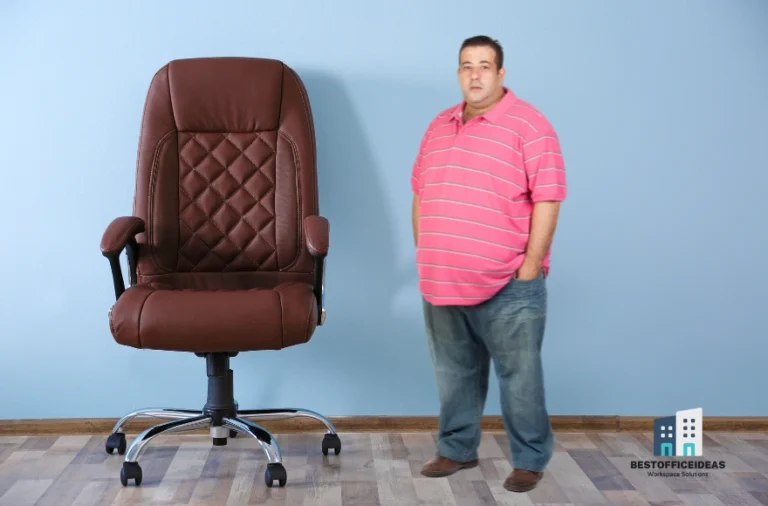
The 300lb capacity makes the Omni a credible option for larger users. Our best office chair for big tall people guide can help you cross-reference sizing further.
If you’re comparing the micro-linen fabric against breathable mesh options, our best mesh office chair roundup covers the trade-offs in detail.
Setup, Onboarding, and Daily Usability
Assembly is standard ergonomic chair work — roughly 20–30 minutes with the included tools. Nothing unusual.
The control layout is logical once you learn it. Left armrest underside: OmniStretch on/off and lumbar adjustment buttons. Right seat underside: recline lock lever and seat height. After a day, it becomes muscle memory.
The USB-C charging port sits at the back of the seat. You’d typically charge it once a month if you use the massage daily. It’s not intrusive — just plug it in overnight and forget it. The 3.5-hour charge time means it’s fully charged before your workday ends.
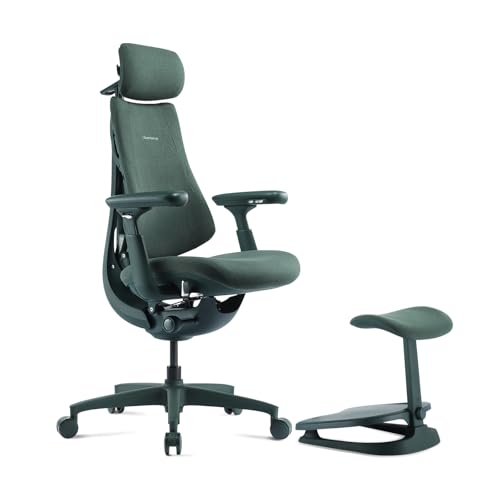
The optional ergonomic footrest attaches easily and adds meaningful comfort in the 135° and 160° recline positions. At 4 lbs, it doesn’t affect the chair’s stability.
For users who alternate between sitting and standing, this chair pairs well with height-adjustable desks. The height range covers most users. Our best office chair for standing desk guide shows which chairs handle that transition best.
Pros, Cons, and Warranty Reality
Pros
- OmniStretch delivers real spinal decompression, not marketing fluff
- 160° recline with full body geometry maintained
- Chip-controlled lumbar precision is unmatched at this price point
- 4D armrests are firm, stable, and genuinely adjustable
- Micro-linen fabric stays breathable across long sessions
- 300lb capacity with solid structural performance
Cons
- Battery dependency is real — it’s furniture you need to charge
- Plastic base plate feels inconsistent with the premium price
- No clear multi-year warranty equivalent to Herman Miller’s 12-year policy
That last point deserves honesty. Reddit user concerns about warranty highlight genuine uncertainty — users have noted the warranty terms aren’t as clear or as long as established competitors. LiberNovo is a newer brand, and if long-term warranty confidence matters to you, that’s a real consideration.
The price is also a significant hurdle. If $1,000+ feels steep, our best office chair under 500 list has strong alternatives without battery dependency.
Best Alternatives: Who Wins Against the Omni?
The Omni doesn’t have direct competitors. Nothing else offers battery-powered dynamic lumbar support in a chair.
But if you’re weighing it against traditional high-end options, here’s the honest breakdown:
Herman Miller Aeron — No OmniStretch, no recline past 125°, but a 12-year warranty and proven 15-year lifespan. Read our herman miller aeron review for the full comparison. The Aeron wins on reliability and longevity. The Omni wins on active lumbar support.
Steelcase Leap V2 — Excellent dynamic backrest in a mechanical, battery-free design. Our steelcase leap v2 chair review covers it in depth. If battery dependency is a dealbreaker, the Leap V2 is your closest alternative.
Branch Ergonomic Chair — A strong mid-range option with no dynamic features. See our branch ergonomic chair review for specs. Roughly half the price and a solid everyday performer.
SIHOO M57 — Budget-friendly, good lumbar support, zero battery tech. Our sihoo m57 office chair review shows it punches above its weight class for the price.
LiberNovo SE — LiberNovo’s own lower-priced model if the Omni exceeds your budget. It lacks the OmniStretch but shares the brand’s ergonomic philosophy.
The Omni wins on unique features. It loses on proven longevity and warranty confidence. That’s the honest trade-off.
Final Verdict: Is the LiberNovo Omni Worth It?
Yes — for the right person.
If you have chronic lower back pain, sit for 6+ hours daily, and want a chair that actively works with your spine rather than just supporting it passively, the Omni is genuinely impressive. The OmniStretch feels real. The recline system is the best we’ve tested at this price point. The chip-controlled lumbar precision sets a new standard.
But if you want furniture that lasts 12 years with a bulletproof warranty and zero battery management, established brands like Herman Miller or Steelcase remain the safer long-term investment.
The Omni represents the future of ergonomics. That future is exciting — and still maturing. Buy it for the innovation. Go elsewhere for the legacy reliability.