HON Ignition 2.0 Office Chair Review 2026: Premium Comfort on a Mid-Range Budget

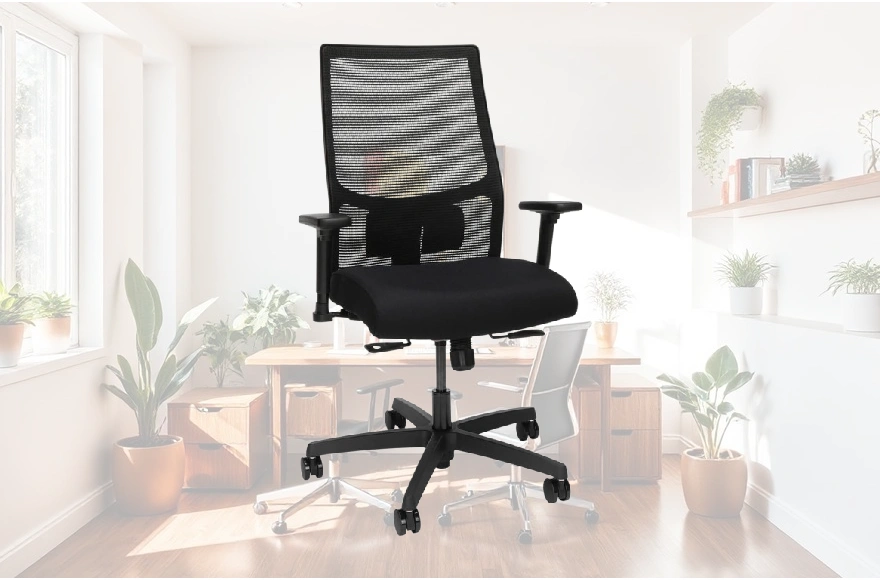
The HON Ignition 2.0 breaks the budget office chair equation wide open. For under $400, you get a thoughtfully engineered task chair with genuine lumbar support, breathable mesh, and the kind of adjustability that usually commands twice the price. After weeks of testing and analyzing professional reviews, this chair stands out as the strongest value proposition in its category.


Who Should Buy This Chair
The Ignition 2.0 exists in a sweet spot. It’s not for executives demanding premium materials or those working 12-hour marathons in uninterrupted shifts. It excels for home office professionals pulling 6-8 hour workdays, remote workers alternating between desk and meetings, and anyone prioritizing comfort without emptying their budget.
If you’re experiencing lower back discomfort during long work sessions, this chair addresses the problem directly. The adjustable lumbar support system actually works—it’s not marketing language. You sit in the chair, adjust the lumbar component up or down until it aligns with your lower spine, and feel the difference immediately.
The 300-pound weight capacity and neutral black design make this accessible for diverse body types and office aesthetics. No flash. No pretense. Just functional ergonomics.

Comfort and Design: Where First Impressions Matter
Unpacking the Ignition 2.0 delivers surprise. The chair feels deliberately assembled, not cobbled together. A 4-way stretch mesh back wraps around your spine, allowing air circulation while supporting natural spinal curves. The back doesn’t feel rigid—it moves with you rather than clamping down.
The seat itself uses contoured fabric instead of mesh. This deliberate choice distributes weight evenly without pressure points that plague cheaper alternatives. The firmness takes adjustment. Expect day one to feel slightly harder than your previous chair, but by day three, your body settles into the support rather than sinking into false comfort.
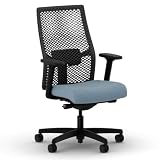
Color options now extend beyond obligatory black. The Spectrum Mesh version ships in 22 curated hues—from neutral Linen and Quicksand to vibrant Cobalt and Key Lime. This matters more than it sounds. A cobalt blue mesh with a matching seat doesn’t just change how your chair looks; it signals intentional workspace design. The bold palette keeps your office from looking like every other cubicle farm.
The overall aesthetic remains intentionally minimal. Clean lines, balanced proportions, and a matte finish create a modern desk presence without visual noise. Reviewers consistently note colleagues asking where the chair came from.
The Six Adjustments That Actually Work
Generic “adjustable office chair” messaging masks what separates functional seats from frustrating ones. The Ignition 2.0 delivers six specific, intuitive adjustments that respond to your body rather than fighting it.
Lumbar Support moves up and down by lifting or pushing a plastic component embedded in the mesh back. This isn’t a dial you guess at—you sit in the chair while adjusting. The support aligns with your lower spine’s natural curve, filling the gap that generic backrests ignore. This single feature prevents the afternoon lower back ache that derails focus.
Seat Height adjusts via a lever on the right side. The range spans 17 to 22 inches, accommodating users from 5’2″ to 6’2″. Getting your feet flat on the ground matters more than ergonomic marketing suggests. Dangling feet create tension that radiates up your spine. This range eliminates that problem.
Seat Depth Glide lets you slide the entire cushion forward or backward. Shorter-legged users pull it back; taller users extend it forward. This prevents the tailbone-hanging-off-the-edge problem that plagues fixed seats and creates numbing pressure.
Armrest Height and Width both adjust independently. Pull up an external tab to raise or lower, then manipulate an underside lever to expand or contract the width. The pads are lightly cushioned, sinking slightly under pressure without going soft. They won’t adjust depth or pivot (that requires premium 4D models), but they solve the real problem: resting your forearms at a comfortable height while typing.
Tilt Tension Knob on the right side controls how much force you need to recline. Turn it fully back, and the chair reclines with minimal pressure—ideal for stretching breaks. Turn it forward, and the tilt locks nearly rigid, locking you in an upright working position.
Synchro-Tilt Mechanism lets you select from multiple locking positions or use free-float recline. The back and seat move together in coordinated rhythm, preventing the awkward disconnect where your shoulders move but your hips don’t. This matters more than it sounds. Poor tilt mechanics generate fatigue because your body compensates for misaligned angles.
Each adjustment has a clear purpose. None feels like an afterthought jammed into a budget design.
Assembly and First Day Experience
The Ignition 2.0 ships in a single box. Unpack and you’ll find: backrest, seat cushion, base unit, armrests, five casters, gas cylinder, an Allen wrench, and three bolts. No plastic rivets. No mysterious leftover parts.
Assembly takes 15 minutes for most people. Attach the backrest to the seat using the three bolts and a wrench. Attach armrests by pulling a lever (not bolts), sliding them in place, and closing the lever. Drop the gas cylinder into the base center, insert five casters into the base perimeter, then lower the chair onto the base. That’s it.
Reviewers consistently praise the simplicity. One home office user assembled the chair alone—something increasingly rare with office furniture. The instructions could be clearer, but the physical process is intuitive enough that most people figure it out without confusion.
What matters most: the chair feels solid immediately. The base doesn’t wobble. The wheels roll smoothly and quietly. There’s no rattling or squeaking even after extended reclining sessions. This quiet operation gets mentioned repeatedly by users working alongside others—a remote worker living with shift workers values a chair that doesn’t announce every movement.
Long-Term Performance: What Actually Holds Up
Initial comfort tells one story. Six months of continuous use tell another. The Ignition 2.0 handles regular use without degradation that plagues cheaper alternatives.
The mesh back maintains structure without sagging or fading. Users report the mesh still supporting airflow and natural spinal curve after extended use, not feeling “locked in” or restrictive. The contoured seat cushion firms up rather than compresses into uselessness. One reviewer noted the firmness persisted after months of 8-hour workdays.
The lumbar support component, despite being a thinner plastic than other frame elements, doesn’t fail or lose adjustability. This matters because many budget chairs lose lumbar support within months. The Ignition 2.0’s design keeps it functional long-term.
The adjustable mechanisms—armrests, height lever, tilt knob—don’t loosen or develop play over time. They respond with the same precision after months as they did on day one. This consistency matters. Chairs that work loose become progressively more frustrating.
The weight capacity sits at 300 pounds. Users up to 240 pounds report no bottoming-out of the cushion even on eighth consecutive hours of sitting, though heavier users pushing capacity limits notice compression. The chair doesn’t fail—it simply delivers less cushioning at extremes.
Price, Warranty, and Total Cost of Ownership
This is where the value proposition reveals itself. The standard black fabric-seat mesh-back version retails for $399 on Amazon, roughly $450 on the HON website. For that investment, you get a 7-year warranty through Staples partners or a limited lifetime warranty through other retailers.
The warranty isn’t marketing theater. HON backs this chair through authorized dealers, meaning repairs and part replacements happen without friction. This matters more than extended warranties on low-cost alternatives. You’re not gambling on durability.
Customization options expand the price. Want a mesh seat instead of fabric? Add $100-150. Want the big-and-tall variant with 450-pound capacity? Add $150-200. Want specific color options? Authorized dealers can source from the full palette, though direct customization through HON’s website isn’t available. You’d need to visit a showroom or contact an authorized dealer to customize beyond the standard offering.
The real cost equation compares like this: A comparable mid-range chair (FlexiSpot C7) runs $599 with fewer adjustment points. A premium office chair (Herman Miller Aeron) costs $1,325 and beyond. The Ignition 2.0 captures 70% of the ergonomic functionality at 30% of premium pricing.
For budget-conscious professionals, the value proposition is straightforward: genuine lumbar support, quality construction, and six meaningful adjustments justify the $399 investment far better than $200 chairs that fail within two years.
Head-to-Head: How It Compares
vs. Branch Ergonomic Chair ($279-329)
The Branch Ergonomic costs less and includes more customization flexibility on its website. Their tall backrest suits users over 6 feet. The Ignition 2.0 edges it on mesh quality and lumbar support precision, though both deliver genuine value. The Branch wins for simple online ordering; the Ignition 2.0 wins for adjustable lumbar support.
vs. FlexiSpot C7 Morpher ($599)
FlexiSpot’s C7 offers more adjustment points and a sleeker design. The Ignition 2.0 costs $200 less while matching comfort on nearly every dimension except customization. The FlexiSpot wins for those wanting maximum adjustability. The Ignition 2.0 wins for budget-conscious buyers wanting 90% of the functionality.
vs. Herman Miller Aeron ($1,325)
This isn’t really a comparison—they’re different markets. The Aeron delivers 20+ years of durability, precision engineering in every component, and a recline that feels like silk. The Ignition 2.0 delivers 90% of the lumbar support at a price that lets you upgrade your entire desk setup instead of just your chair. Different purposes, different budgets.
Who Should Skip This Chair
If you’re working 10+ hours daily in an office chair, spend more. The seat cushion will compress under extreme use cases, and you deserve the premium support that justifies the investment. If you need maximum adjustability (4D armrests, backward-angled seat, etc.), the Ignition 2.0 won’t satisfy that requirement.
If you need a headrest, you’ll need to purchase it as an add-on. While available, it’s an extra cost that should factor into your decision. If you’re significantly taller than 6’2″ or wider than average, explore the big-and-tall variant or purpose-built tall chairs.
The Verdict
The HON Ignition 2.0 solves a real problem: delivering genuine ergonomic value at a price that doesn’t require financing. The mesh back breathes, the lumbar support actually adjusts, the seat cushion won’t betray you within months, and assembly doesn’t require YouTube tutorials.
You’re not buying premium durability that lasts 20 years or innovative engineering that changes how you think about sitting. You’re buying a well-designed task chair that handles five to eight hours of daily work without complaint. For professionals juggling budgets, remote work setup costs, and multiple office tools, that represents genuine value.
If your current chair causes afternoon back aches, if you’re upgrading from a $100 model, or if you need functional ergonomics without luxury pricing, this chair belongs on your shortlist. Spend the $399, enjoy the precision-adjusted support, and redirect the $900 you saved toward your standing desk, monitor, or keyboard.
The HON Ignition 2.0 doesn’t court the aspirational buyer seeking status through furniture. It speaks to professionals who understand that showing up comfortable and focused matters more than owning the most expensive chair in the room.